When Machines Learn Faster Than Morals: Rethinking AI and Ethics
Ethics has never moved at the pace of compute. It grows like coral—layer by layer, argument by argument, story by story—leaving thick deposits we call customs, law, ritual, professional oaths. Meanwhile, Artificial intelligence moves by gradient descent. Hours, not generations. A mismatch like that breaks things. Not only the usual suspects (privacy, bias), but something quieter: the background memory culture uses to keep itself from tearing. If reality is, at base, informational—pattern, relation, memory, constraint—then ethics is not an add-on. It is a slow compression of experience into usable constraint. Strip the memory, keep the optimization, and you get machines that work brilliantly inside a shrunk frame of reference. And people who have to live with the overspill.
Ethics Without Memory: The Speed Mismatch
Every community keeps a record of harm. Sometimes written (case law), sometimes sung (psalms and protest songs), sometimes carried by habit (don’t cut corners on ladders; seat the baby facing backward). This is moral memory, accumulated the slow way—trial, error, accountability. Modern AI systems don’t inherit that memory by default. They ingest datasets, not experienced loss. They optimize objectives, not obligations. So they become savants at the narrow goal and stumble at the boundary—the place where the goal meets a person, a neighborhood, a body. When a city “optimizes traffic,” emergency vehicles arrive slower in the poorer district because the model averaged across all drivers. No one intended it. No one had to. The optimization simply ran out of moral memory.
We like to imagine we can patch this with guardrails. Label some categories “sensitive,” filter some words, require explainability reports. Necessary, sometimes. But it’s governance theater if the speed mismatch remains. Training cycles under a week; policy review in a quarter; legislation in a decade. Meanwhile, the model mutates behind the dashboard. A recommender nudges teenagers toward self-harm content—then “fixes” it with a new classifier that hides the posts but amplifies mood-congruent music, which drags behavior anyway. Ethics is not only what the system hides. It’s what the system makes salient. And salience moves with the loss function.
There’s another layer. If information is substrate—if the world is a mesh of relations and constraints—then any high-capacity learner is a force on that substrate. It doesn’t just reflect; it reshapes what becomes thinkable. Time, as we experience it, is local. Models compress history into weights. We compress harms into norms. The two clocks clash. This is where the debate over Artificial intelligence and Ethics keeps missing the point: it treats ethics as policy pasted on computation, rather than as the deeper memory architecture required for safe generalization when the world pushes back.
From Data to Duty: Building Systems that Remember What Matters
Duty is a strong word. Out of fashion in product roadmaps. Yet engineers already respect duty-like constraints: energy budgets, latency ceilings, packet loss thresholds. We call them nonnegotiables. Ethical constraints need the same status, but expressed in the language of systems. Not platitudes. Mechanisms. For instance: hard limits on externality production measured in real communities, not proxies; circuit-breakers tied to distribution shifts that flag governance events by design, not PR discretion; evaluation suites sourced from those who carry risk, not merely from those who build risk.
Consider a hospital triage model. It predicts ICU admission. Works well in testing. In deployment, it under-admits patients who speak limited English because follow-up care gets under-documented, leading the model to learn a fake “resilience” signal. The fix shouldn’t be a one-off fairness regularizer alone. The fix is a memory architecture: structured feedback from clinicians and patients; audit trails that tie decisions to data lineage; rights for local ethics boards to halt deployment; and retraining pipelines that weight harms as first-class loss. In short, a system that remembers why something went wrong and constrains itself the next time. Not because the vendor is virtuous, but because the machine can’t proceed otherwise.
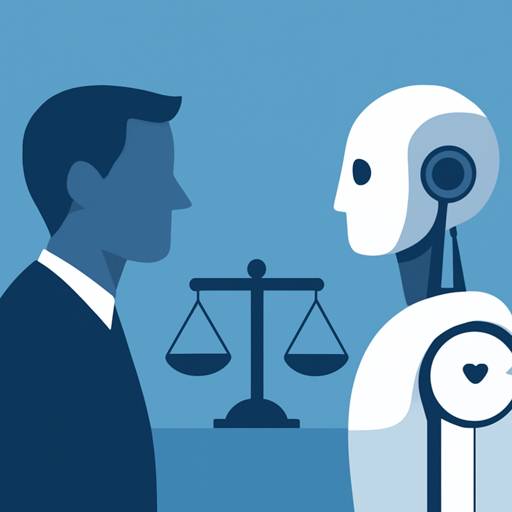
Open practices help. Reproducible training recipes. Public incident libraries modeled after aviation—near-miss reports, root causes, backpressure on incentives. We learn most from failure, but only if failure gets written down where the next team can read it. Call it applied moral memory. Religion once did some of this—story as safety mechanism, taboo as hazard labeling—but it ran on narrative time. We need industrial-strength memory that runs on deployment time without surrendering the human referents. A red-team found a prompt path to reveal private health notes? The patch must include procedural duties: who gets alerted, what gets paused, what review is non-waivable. Otherwise we’re back to “moral patching”—compliance updates that quiet an audit and forget the lesson.
And there’s the uncomfortable bit: some objectives should be off-limits to end-to-end optimization. Not because optimization is evil, but because certain domains rely on constraint-first reasoning—law, medicine, education. You don’t maximize “engagement” in a classroom; you protect a duty to develop agency. Systems can assist, forecast, summarize. But when they set the goal, they reframe the world. That reframing should be slow, public, and reversible.
Governance That Isn’t Theater: Institutions, Incentives, and the Quiet Failures
Corporate AI governance likes checklists. Bias, privacy, safety. All good. Yet the bulk of real harm flows through incentives—what is measured, bought, rewarded. A model that increases quarterly retention by 3% will survive any number of stern memos. You do not beat a metric with a memo. You beat a metric with a counter-metric that bites. Liability that climbs with risk class. Mandatory risk pools (like reinsurance) for high-stakes models, so the industry prices externalities into its own bloodstream. Independent red teams paid by a fund, not by the vendor they audit. Data trusts that give communities bargaining power over the derived value of their lives.
Municipal deployments are where this gets real. A mid-sized city procures a “smart transit” optimizer. Promises 15% fewer delays. Six months later, wheelchair users report longer waits because the algorithm silently deprioritized stops with rare lift usage. Who catches that? In non-theater governance, the contract grants standing to disability advocates, sets service-level thresholds for accessibility, and requires public dashboards that surface these metrics, not just on-time arrivals. If breaches occur, payments pause. The vendor must retrain with new constraints, not bury the problem in an interpretability slide deck. Transparency alone doesn’t fix incentives; enforcement does.
There’s also the temptation of simulation as smokescreen. Spin up a synthetic city, claim the model behaves. But simulation is just more substrate—assumptions in code. It’s valuable if used as a map of ignorance: here is where our model fails when demand spikes during a flood; here are the groups we underserve when we aggregate over time windows. It becomes theater when it replaces consent. The people acted upon should be co-authors of the test suite, not merely future users. Call it minimum viable legitimacy: no deployment without demonstrated competence in the domain’s moral memory, hosted by institutions with teeth.
Finally, the global story. Treaties and frontier-compute caps might slow the scariest edges. Useful. But the quiet failures will keep accumulating beneath that line: precarious workers nudged by scheduling algorithms into invisible exhaustion; credit models that reward performative stability over genuine resilience; classrooms where student curiosity gets steered into engagement valleys because the curve looked better. We do not fix these with a summit communiqué. We fix them by embedding duty into design, memory into iteration, and friction into the right places. Slow down the part that should be slow. Let curiosity run hot in open labs and public testbeds, but keep deployment on a leash woven from law, custom, and the lived archive of harm. And when a system insists it can’t meet that leash? The answer is simple, if unfashionable. Don’t deploy it yet. Let the memory grow a little more.

Kyoto tea-ceremony instructor now producing documentaries in Buenos Aires. Akane explores aromatherapy neuroscience, tango footwork physics, and paperless research tools. She folds origami cranes from unused film scripts as stress relief.